I said that in a dream this morning.
I got rain for my birthday. Nice!
“Let it rain and protect us from the Cruel Sun.”
This little light of mine / I’m gonna let it shine
 Science Photo Library
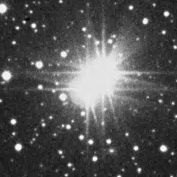
This binary star system is 56 light years distant from Earth in the constellation Cygnus.
The light we see tonight left the Swan about the time I was born.
("This Little Light of Mine" is a gospel children’s song written by Harry Dixon Loes (1895-1965) in about 1920. [per Wikipedia])
Portraits of MJH
 |
http://www.edgewiseblog.com/mjh/photos/portraits-of-mjh/ Date: May 19, 2011 |
Frohe Geburtstag, Tina Fey! (danke, AE)
5/18/1970
Backlighting
As a rule made to be broken, you don’t put your subject between you and the light source. I don’t think I was ever successful with a backlit subject using film. Digital automatic settings make it easy. Here are two of my most dramatic photos:


But the one below didn’t work, even though the conditions are nearly identical with the first one above:

One reason to avoid backlighting is to avoid flares and other artifacts, but even those can be artistic in limited amounts.


ISO
ISO is short for International Organization for Standardization (why not IOS?). In the context of photography, ISO refers to light sensitivity of media, film and digital. Media that is more sensitive to light needs less light to expose an image and has a higher ISO number. Media with an ISO of 100 is less sensitive – requires more light – than ISO 400, which is 4 times more sensitive (requires only 25% as much light). More or less light can also be a function of more or less time: as ISO increases, less time is needed for exposure. Therefore, low ISO is called slower and high ISO faster.
Keep in mind that ISO is one of three intertwined variables in exposure. The other two are aperture (lens opening) and shutter speed. Aperture determines how much light enters the lens at once – wide for a lot, narrow for a little. Shutter speed determines how long that amount of light enters – slow for more, fast for less. A higher ISO makes it possible to use smaller apertures (increased depth of field) or faster shutter speeds (frozen movement). Available light obviously affects choices here, but so does the use of a telephoto or zoom lens, which requires more light than a wide angle and usually has more limited aperture. Handheld shots in low light may require higher/faster ISO, whereas using a tripod may allow for lower/slower ISO.
Ignoring depth of field and blurring – hard to ignore – one can produce nearly identical exposures through myriad combinations of ISO, aperture, and shutter speed.
But higher ISO has a dark side: noise (electrical interference). Consider both pairs of photos:

above: ISO 125. below: ISO 1000.


left: ISO 250. right: ISO 1250.
In both pairs, the higher ISO wasn’t necessary. These examples were chosen to highlight noise, an increasing problem as ISO increases. However, in low light without a flash you may have no choice but to increase ISO, but no more than necessary.
 ISO relates to Shooting the Moon. Most automatic settings choose a higher ISO when the scene is mostly black. But then the area of the moon is overexposed and the whole image is grainy. A low ISO (100, 125) that would not work on a moonless night or in a dim room works with the bright moon and provides an even blacker, smoother surrounding space. ISO 1000 ruins this photo.
High ISO film appears grainy because larger grains of of silver halide are used – the higher the ISO, the larger the grains. There are no such grains in digital photography, yet noise has a similar effect. One way cameras adjust ISO is by amplifying the signal in the image sensor, which also amplifies the inevitable noise, much like cranking the stereo to 11 increases hissing.